Newsletter
Career Progression in Architecture: Unlocking Talent and Innovation
Introduction
In many organizations, career progression in architecture is a challenge, often overshadowed by a lack of clarity and support. This can stifle innovation, lead to talent attrition, and leave critical architectural roles underdeveloped. To thrive in a competitive and rapidly evolving business landscape, organizations need to build structured pathways that support growth at all levels of architecture.
The Challenge: Navigating Undefined Career Paths
For Engineers:
Skilled engineers often lack guidance on transitioning to architectural roles. This absence of visibility and structured mentorship creates a disconnect between talent potential and organizational needs.For Architects:
Architects may find themselves confined to solution-level responsibilities, with no roadmap for advancing to enterprise-level or leadership roles. This stagnation can lead to frustration and missed opportunities for professional growth.For Organizations:
Without structured progression, organizations risk talent loss, high attrition rates, and difficulty in filling strategic roles. This gap can hinder the ability to scale, innovate, and meet long-term objectives.
A Structured Framework for Architectural Growth
Organizations can bridge these gaps by implementing a robust framework that aligns with individual aspirations and business goals:
1. Define a Career Progression Ladder
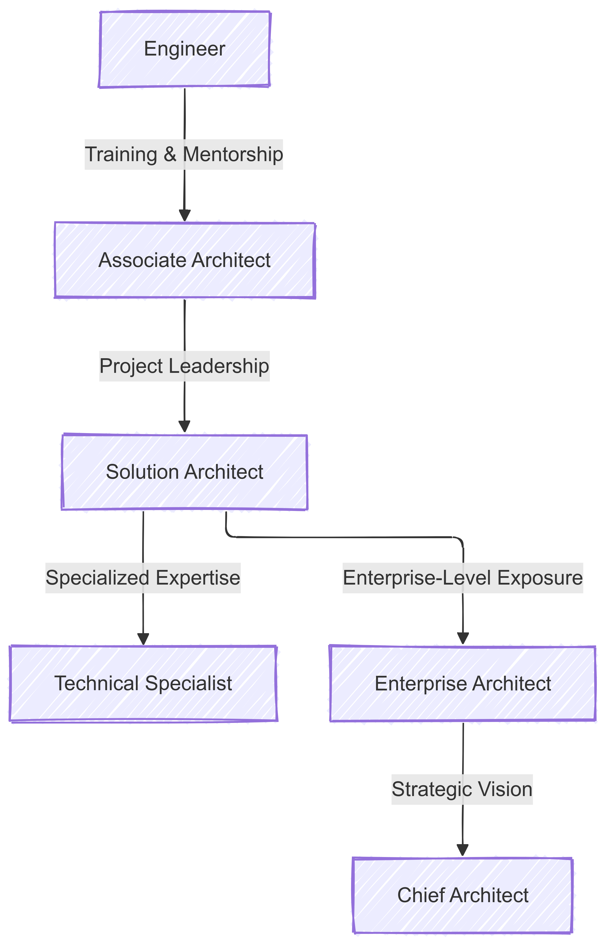
Establish clear roles such as Associate Architect, Solution Architect, Enterprise Architect, and Chief Architect.
Articulate the skills, competencies, and outcomes required for each role.
Ensure alignment with the organization’s technical and strategic goals.
2. Develop Learning and Upskilling Pathways
For Engineers: Offer training in architectural methodologies like TOGAF, SAFe, and domain-specific skills. Include soft skills such as stakeholder management and communication.
For Architects: Provide opportunities for deepening strategic thinking, advanced technical skills, and leadership development.
3. Foster Mentorship and Collaboration
Pair senior architects with engineers or junior architects for hands-on guidance.
Promote knowledge sharing through collaborative projects, forums, and workshops.
4. Enable Rotational and Shadowing Opportunities
Allow engineers to participate in architectural decisions or shadow architects on key projects.
Provide architects exposure to enterprise-level strategy and business planning.
5. Offer Dual Growth Pathways
Technical Expertise: Specialization in cutting-edge solutions and system design.
Leadership: Progression to roles such as Chief Architect, emphasizing strategic influence and governance.
Visual: Career Progression Pathway
The Benefits of Structured Pathways
For Engineers: Clear, achievable steps to transition into architectural roles increase motivation, engagement, and retention.
For Architects: Defined growth paths provide direction and a sense of purpose, reducing stagnation and turnover.
For Organizations: A robust pipeline of architectural talent ensures scalability, adaptability, and innovation to meet business demands.
Conclusion: Building the Architects of Tomorrow
Career progression in architecture should not be an afterthought. By creating transparent pathways, fostering mentorship, and offering dual growth tracks, organizations can nurture talent and strengthen their architectural capabilities. The result? A resilient workforce capable of driving innovation and achieving strategic goals.
Let’s not just build systems: let’s build talent pipelines that shape the future of enterprise architecture.
About the Author
With over two decades of experience in payments and enterprise architecture, I specialize in aligning talent strategies with business objectives. My mission is to help organizations develop frameworks that empower engineers to become architects and architects to evolve into strategic leaders. Let’s transform careers and drive sustainable growth together.
- enterprise architecture
- strategy
Related editions
- Stop Celebrating AI Headcount Savings. You Just Deleted Your 2031 Leadership Team.Eighty percent of companies deploying autonomous AI cut headcount, and Gartner says the returns never arrived. The people did not come back. And the juniors you never hired are the leadership team you will fail to find in 2031.
- One GitHub Issue. And the Agent Can Pay.This month, a single opened issue could hijack every repository running Claude Code’s action. The uncomfortable part isn’t the bug. It’s that 1,578 agent tool-servers can now move money, and the exploit shipped in a tool description.
- The Agentic Settlement Layer Just Forked. The Bridge Is Two Issuers Wide.Europe closed its stablecoin door on 1 July. America opens a different one on 18 July. Your agents will settle through whichever side you didn’t architect for.
Have a similar challenge?
Book a 30-minute call to talk through AI governance, architecture or payments: no pitch, just a senior second opinion.
Book a 30-min call